"Franco Tagliavini" Theatre

Learn

"Franco Tagliavini" Theatre

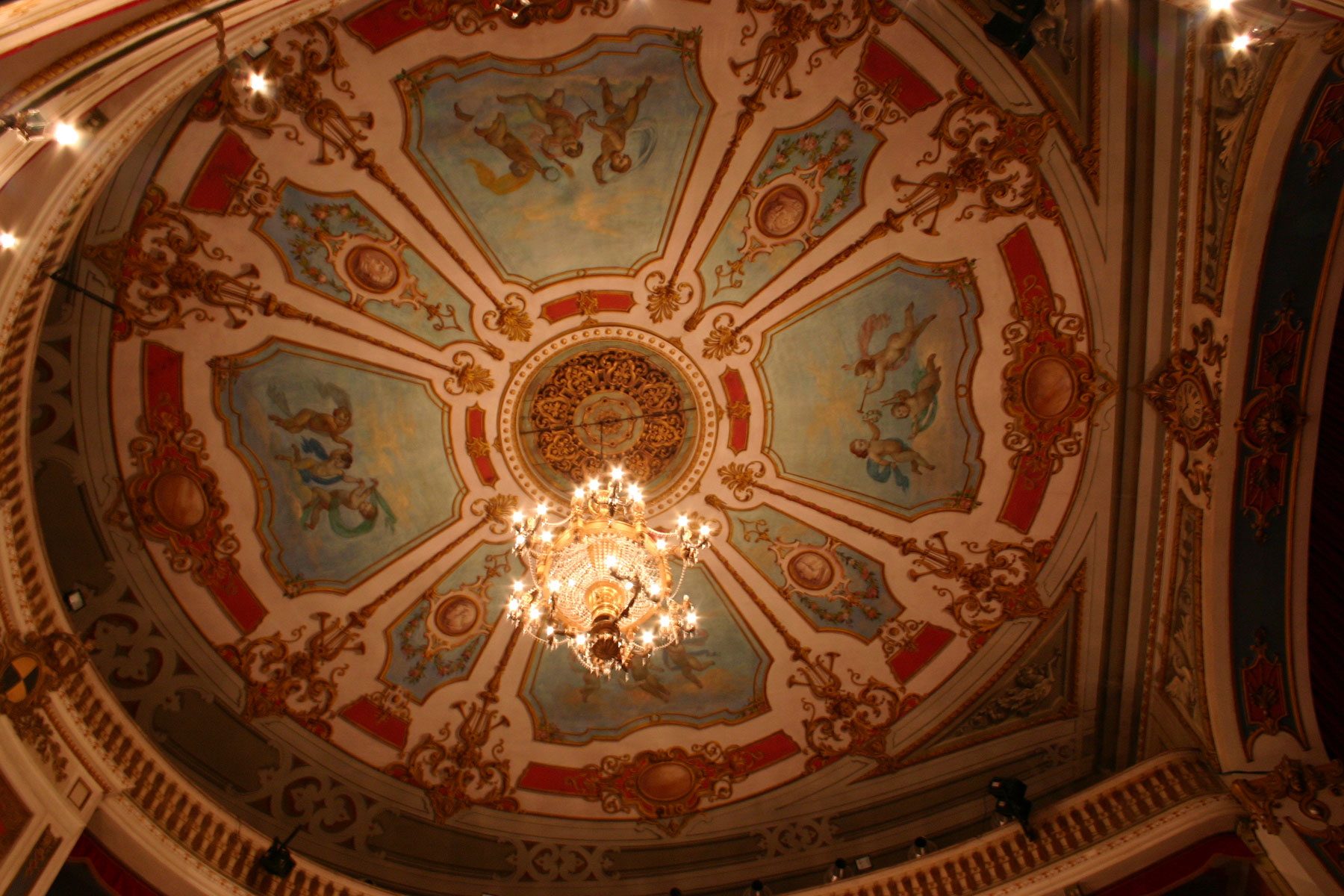
The Teatro Comunale Franco Tagliavini ("Franco Tagliavini" Theatre) is located in the southeastern corner of the Rocca, preceded by the fortress courtyard. Built between 1862 and 1868 to a design by Antonio Tegani of Reggio Emilia, it replaced two earlier theatres: one from the 16th century, designed by Lelio Orsi and destroyed in the early 18th century, and another erected later during the 18th century. The present building is a fine classical opera theatre, modeled on those of Reggio Emilia and Carpi. The interior decoration of the main hall and entrance foyer was executed by Cesare Cervi, the Reggio-born artist who also adorned the Council Chamber of the Rocca.

It is known that, within the court of the Lords of Novellara, there once existed an ancient hall for comedies. A letter dated 1567, addressed to Count Alfonso I Gonzaga, mentions that the stage set was almost completed, so that Lelio Orsi could soon begin to paint it. On 28 January 1568, to celebrate Alfonso I’s marriage, this same hall was inaugurated with a performance whose magnificent stage scenery had been designed by Orsi himself.

This early theatre - probably situated in the same area of the Rocca where the present one now stands - is only sparsely documented. The only surviving records are a schematic 17th-century plan of the Rocca and a curious description by Malagoli (later transcribed by C. Melloni in Cronistoria di un teatro). The Gonzaga family’s old theatre was demolished in 1858, along with the rooms on the Rocca’s southern side, to make space for the stage of the new theatre that was to rise on the same site.

Construction began in 1862. The Theatre’s horseshoe-shaped auditorium features three tiers of boxes, a gallery, a large and elegant central box, a refined proscenium arch surmounted by a clock, and a spacious stage with wooden gridwork. The interior decoration was again entrusted to Cesare Cervi, who designed an elaborate square ceiling pattern with mixtilinear framing to embellish the hall. In accordance with his commission, beside the inner decorative apparatus, Cervi also provided twelve scenic backdrops and several stage machines capable of producing effects such as rain, thunder, lightning and flashes. The new Theatre was inaugurated on 25 July 1868, during the Saint Anne’s Fair (Fiera di Sant’Anna), with a performance of Giuseppe Verdi’s “I Lombardi alla prima Crociata” (the Lombards on the first Crusade). In the years following its opening, the Theatre enjoyed an intense period of activity, primarily hosting lyric opera performances. From the late 19th century into the early 20th, performances slowed, before resuming in 1907 with a more diverse program. Activity was interrupted again during the two World Wars, and in the postwar years the Theatre fell into disuse, remaining closed for a long time.

In 1984, the Municipal Administration initiated a restoration project designed by architect C. Melloni of Novellara. Today, the entrance hall, ticket office, cloakroom and foyer, stalls, first tier of boxes and stage have been fully restored. The Theatre was officially reopened to the public in 1988.


ACCESSIBLE DURING SCHEDULED PERFORMANCES WITH A VALID TICKET
  • Historical Sites

GALLERY

Nearby